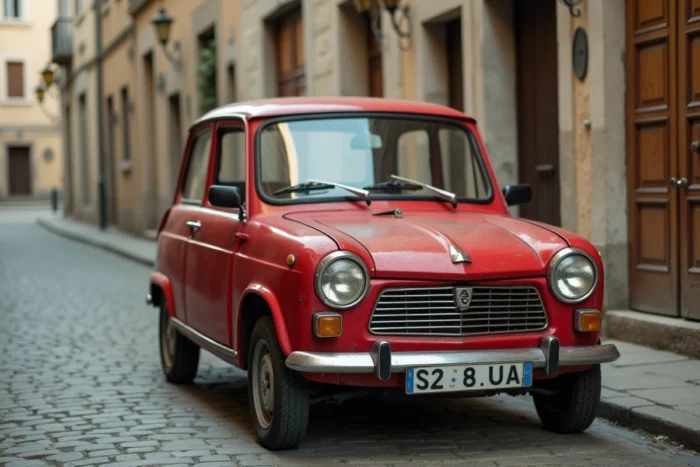
The Renault 5 and the Super 5 share a name, a manufacturer, and a compact city car silhouette. However, they are two distinct cars, separated by more than a decade of production and different technical choices. Understanding what sets them apart requires looking back at their lineage, mechanical design, and the status they occupy today in the collector’s market.
Lineage and repositioning: two generations, one name
The original Renault 5 (R5) was produced starting in 1972. The Super 5 (or Supercinq) succeeded it in 1984, remaining in production until 1996. Despite the similar name, the Super 5 is not a facelift of the R5: it is an entirely redesigned model, with a new platform and a new approach to interior space.
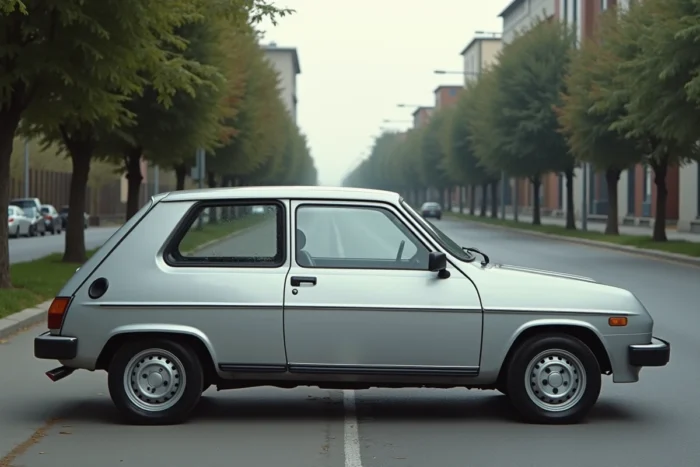
The R5 embodies the style of the 1970s with angular lines, recessed rectangular headlights, and a narrow vertical grille. The Super 5 adopts a rounder design, typical of the mid-1980s, with more generous glass surfaces and a more integrated approach to bumpers within the bodywork.
This generational shift occurred in a context where Renault was modernizing its range to face competition from the Peugeot 205 and the Volkswagen Golf. To better understand the differences between Renault 5 and Super 5, one must look beyond the surface and examine the mechanics, equipment, and dimensions.
Engines and transmission: what changes under the hood
The first-generation R5 was equipped with small-displacement gasoline engines. The base version used a low-power engine, paired with a four-speed gearbox controlled from the dashboard. This configuration was sufficient for urban use but limited performance on the road.
The Super 5 benefited from a wider range of more powerful engines. Its lineup included gasoline engines from the entry-level model to the famous GT Turbo version, as well as diesel engines. The gearbox was upgraded to five speeds on most trims, enhancing driving comfort at stable speeds.
The special case of turbo versions
The R5 had its own sports legend with the R5 Alpine and especially the R5 Turbo, a model with a rear mid-engine designed for competition. This positioning was radical: the engine moved from the front to behind the passengers, transforming the city car into a homologated rally car.
The Super 5 GT Turbo adopted a different philosophy. The engine remained at the front, in a classic front-wheel-drive architecture. The power came from a turbocharged engine that offered performance comparable to the Peugeot 205 GTI and Volkswagen Golf GTI of the time. The GT Turbo remained an accessible production car, whereas the R5 Turbo was a nearly handcrafted object produced in limited quantities.
Dimensions, interior space, and standard equipment
Both cars are city cars, but the Super 5 offers more interior volume. The slightly extended wheelbase and improvements in the cabin architecture allowed for more space in the rear seats and the trunk.
The standard equipment also illustrates the gap between the two eras:
- The R5 offered minimal equipment in its early versions: no tachometer, limited instrumentation, basic upholstery, and manual steering on most trims.
- The Super 5 included, depending on the versions, more comprehensive instrumentation, tinted windows, an improved heating system, and, on higher trims, power steering and alloy wheels.
- The phase 2 of the Super 5 (from 1987) further enhanced the equipment with electric mirrors and aesthetic updates (redesigned bumpers, modernized dashboard).
The equipment gap reflects a decade of evolution in automotive standards, not just a commercial positioning choice.
Collector’s value and heritage status of the R5 and Super 5
In recent years, both models have moved from being simple used cars to being sought-after youngtimers. The dynamics are not the same for both.
The R5 Turbo (mid-engine) reaches very high values due to its rarity and competition pedigree. The classic civilian versions of the R5 remain more affordable, but their condition is becoming a determining factor.
The Super 5 GT Turbo has transitioned from being an accessible youngtimer to a collector’s model, with a sharply rising value. Well-maintained and original examples are becoming scarce, fueling demand among enthusiasts.
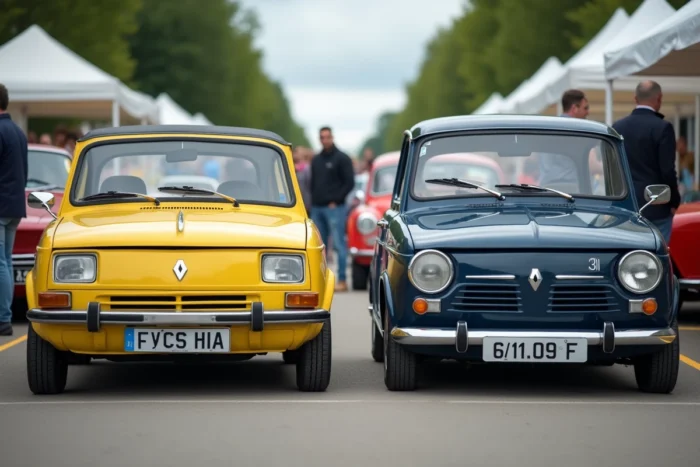
Renault is also leveraging this dual lineage in its communication around the new electric R5. The brand presents the two thermal models as a “double heritage,” a legacy on which the identity of the recently launched electric city car rests. This repositioning as heritage icons gives the original R5 and Super 5 renewed visibility, even among an audience that did not know them when they were new.
The distinction between Renault 5 and Super 5 is as much about the mechanics as it is about the era that produced them. The former remains a marker of the 1970s, with mechanical simplicity that appeals to restoration enthusiasts. The latter reflects the upgrading of city cars in the 1980s, with superior performance and comfort. In today’s market, it is the original condition and maintenance history that determine the true value of each example.