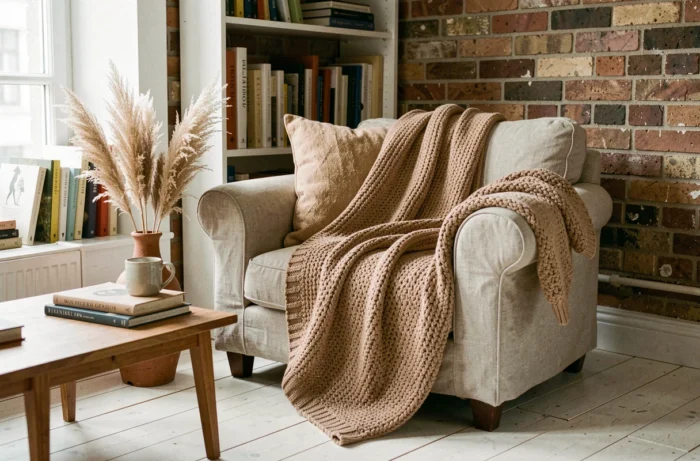
A soft sofa and three scented candles are not enough to make a house comfortable in the middle of July. Transforming your interior into a cocoon requires working on two fronts: the visible ambiance (textiles, lighting, colors) and the invisible comfort (temperature, acoustics, air quality). The latter is often overlooked, even though it directly affects the pleasure of coming home.
Thermal comfort summer and winter: the foundation of a true cocoon
Before choosing a throw or a wall color, it’s wise to check that the house maintains a pleasant temperature effortlessly. A room overheated by the sun in the afternoon or icy in the morning ruins any attempt at a cocooning atmosphere, regardless of the decorating budget invested.
External solar protections (shutters, adjustable sun blinds, projection screens) block heat before it passes through the glazing. This is the most effective passive solution against summer overheating. A ceiling fan, installed in the living room or bedroom, complements the system by creating a steady airflow without the energy consumption of an air conditioner.
The ADEME also compares the respective energy consumption of a fixed air conditioner and a simple fan, reminding us that energy efficiency and home comfort do not oppose each other. Limiting solar gains remains the first step towards an interior where one feels good all year round.
On the revuedepresse.biz home site, you can regularly find feedback on these trade-offs between thermal renovation and interior design.
Note: fixed solar protections and fixed fans are only covered by MaPrimeRénov’ as part of a substantial renovation associated with a gain of several classes in the DPE. It’s better to check the project’s eligibility before starting the work.
Textiles and natural materials: creating a cocooning atmosphere room by room
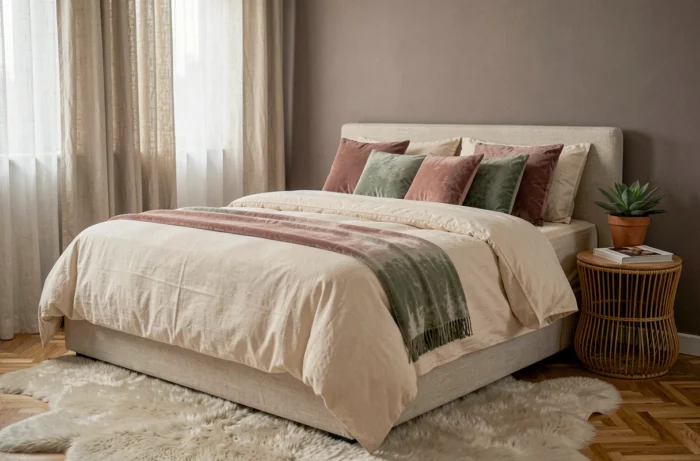
Once thermal comfort is assured, we can move on to the visible layers. The principle is simple: each added textile should serve both the touch and the eye. A washed linen throw, a thick wool rug under the coffee table, and corduroy cushions on a reading chair form a trio that transforms a slightly cold living room into a refuge.
Which materials to prioritize according to the room
- In the living room, focus on wool or thick cotton throws, cushions of varied textures, and a rug dense enough to cushion footsteps and insulate from the floor.
- In the bedroom, washed linen for sheets provides a soft and breathable touch, while a natural down comforter is a better alternative to a synthetic duvet that is too warm for mid-season.
- In the reading nook or office, a chair covered in boucle fabric and a small blanket within reach are enough to define a retreat space.
Raw wood (oak, walnut, beech) also plays a structural role. A solid wood shelf, an unvarnished table top, or a light wood photo frame add visual warmth without overloading the decor. Wood and natural fibers anchor the cocooning atmosphere in something tangible, where plastic and lacquered metal maintain a distance.
Soft lighting and gentle colors: adjusting the atmosphere without major renovations
Artificial light is the quickest lever to change the atmosphere of a room. We’re talking about a few concrete actions, not a complete electrical renovation.
Replacing the central ceiling light with two or three low light sources (table lamp, adjustable floor lamp, warm white LED string lights) eliminates the clinical lighting that breaks any sense of refuge. The ideal color temperature for a cocooning space is around 2,700 kelvins, which corresponds to an orangey light similar to that of a thick candle.

Color palette for a cocoon interior
Earthy tones (terracotta, sandy beige, sage green, clay brown) work better than pure whites to envelop a space. They can be applied to a single wall, the one facing the sofa or the head of the bed, to avoid a cave effect in a small room.
A ceiling painted in a slightly darker shade than the walls (a warm beige rather than pure white) visually lowers the height and enhances the feeling of enclosure. This simple gesture, rarely mentioned in decor guides, alters the perception of volume without significantly reducing natural brightness.
Indoor plants and living elements: a cocoon that breathes
Plants provide a double benefit in a cocooning decor: they introduce visual movement (the leaves move, grow, change) and help regulate ambient humidity.
Here are some practical rules to ensure that plants genuinely contribute to the ambiance rather than becoming a chore:
- Choose species suited to the actual light levels of the room. A pothos or philodendron tolerates dim corners, while a fiddle leaf fig needs a nearby window.
- Grouping three to five plants of different sizes on the same piece of furniture or in the same corner creates a more pronounced mass effect than a single isolated plant per room.
- Use terracotta, woven wicker, or stone cachepots to extend the palette of natural materials already present in the textiles and furniture.
A cocoon interior benefits from integrating elements that evolve over time, whether it’s a climbing plant on a shelf, a bouquet of dried flowers renewed each season, or a bowl of fresh fruit on the kitchen table. What lives makes the space vibrant.
Transforming a house into a cocoon does not rely on a single purchase or a seasonal trend. It is a combination of coherent decisions, from choosing a fan to the weight of a throw, that ultimately creates a space where one feels protected without needing to think about it.