The European AI Act, embedded AI models on devices, and the announced end of physical console gaming are reshaping the tech and geek landscape this year. Instead of listing every product release, we focus on the structural trends that are permanently altering usage.
AI Act and transparency obligation: what changes concretely for geek tools
Since August 2, 2026, the rules of the AI Act require any chatbot, conversational agent, or virtual avatar deployed in the European Union to clearly indicate its AI nature to the user. The European Commission has published transparency guidelines that specify this obligation, relayed by France 24, RMC.BFMTV, and Service-Public.
For geek users, the impact is direct. Voice assistants integrated into mixed reality headsets, AI companions in online games, and technical support chatbots must now display machine-readable labeling on their generated content. In practice, we observe that game studios and app publishers are updating their interfaces to incorporate these mentions, which modifies the user experience in menus and in-game conversations.
The other aspect concerns the mandatory labeling of deepfakes and AI-manipulated content. Any image, video, or audio generated or substantially modified by artificial intelligence must carry a detectable label. Content-sharing platforms (fan art, video edits, mods) are directly affected. Non-compliance exposes them to financial penalties that RMC.BFMTV describes as “serious.”
To keep up with tech and geek news beyond product announcements, a useful resource: https://talkgeekytome.net/, which regularly covers these regulatory topics and their consequences on geek culture.
Local on-device AI: why embedded models change the game
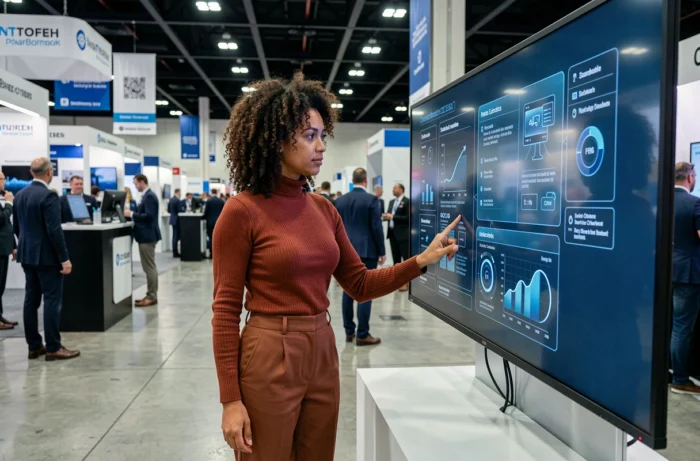
The most structural trend on the hardware side does not come from a new processor or an additional foldable screen. It comes from the massive shift of AI inference to the device itself, without cloud connection. The NPUs (Neural Processing Units) integrated into mobile SoCs and laptop GPUs now allow for running language and vision models directly locally.
Local inference eliminates network latency and protects personal data. For a gamer, this means NPCs with adaptive behaviors calculated on their own machine. For a content creator, this means image generation or real-time subtitling without sending their files to a remote server.
We recommend paying attention to NPU specifications when purchasing hardware this year. A device lacking local inference capability will be functionally limited within two to three product cycles, as software publishers condition their new features on this architecture.
End of physical console gaming and rise of cloud gaming
PlayStation has announced the end of physical video games starting in 2028. This decision, confirmed by several specialized media, marks a turning point for the geek culture of physical media: collections, second-hand resale, lending among friends.
The technical consequences are numerous:
- Bandwidth becomes a hardware prerequisite just like SSD storage. A household with an unstable fiber connection will see its game library become partially inaccessible.
- Cloud gaming is gaining relevance as complete dematerialization makes the streaming model as legitimate as local downloading. Game Pass-type offers already integrate streaming alongside downloading.
- The question of preserving video game heritage arises acutely. Without physical media, the longevity of a title depends entirely on the publisher’s willingness to maintain its servers.
For collectors, the window of time before 2028 becomes a period of strategic accumulation. Limited physical editions are already gaining value in the secondary market.
Low-power connected objects and 5.5G networks: the hardware foundation for future uses
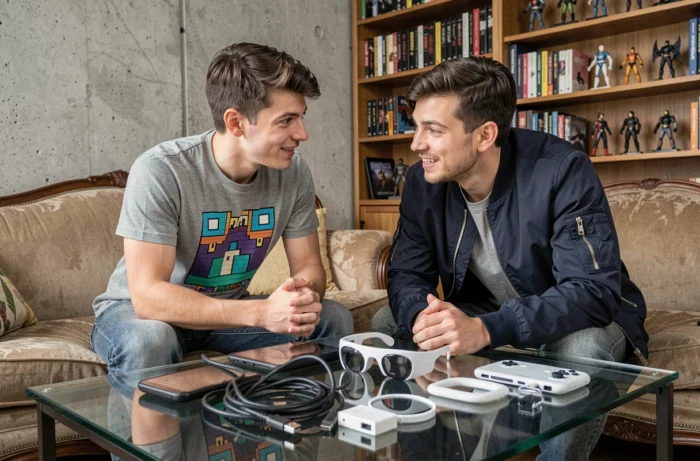
The connected objects segment is evolving towards low-power architectures that significantly extend the autonomy of home sensors and wearables. This year, Matter and Thread protocols are becoming widespread in smart home ecosystems, reducing the fragmentation that hindered adoption.
On the network side, 5.5G deployments (also known as 5G-Advanced) are beginning to offer speeds and latencies that make streaming mixed reality games from a standalone headset viable. The first real-world use cases show that latency drops below perceptible thresholds for competitive gaming, provided one is in a covered area.
Two points deserve attention:
- 5.5G compatibility is not guaranteed on devices marketed as “5G” in previous years. Check frequency band support before purchasing any router or terminal.
- Connected glasses with heads-up display are hitting the consumer market this year, backed by several manufacturers. Their real utility depends directly on local network coverage and the available application ecosystem.
French deep tech: biotech, quantum, and energy accelerating
This year’s French tech landscape is not only a consumer of international trends. The national deep tech sector is accelerating in three verticals: biotechnology, quantum computing, and new energies. These fields, long confined to laboratories, are beginning to produce tangible applications that interest the geek community.
French quantum computing has reached an industrial prototyping stage. This year’s announcements concern machines capable of solving specific optimization problems, not yet universal computers. For developers and makers, this means the emergence of SDKs and quantum simulation environments accessible from a standard PC.
The intersection of these deep techs and geek culture occurs through open-source communities. Biohacking, quantum simulation, and home energy monitoring projects are emerging on GitHub and in fab labs, making these technologies less abstract than they were two years ago.
The year 2026 is distinguished less by a flagship product than by a regulatory and architectural shift. The AI Act redefines the rules of the game for any service integrating AI, local inference redistributes computing power, and the programmed end of physical media forces a rethink of the very notion of digital ownership. It is these underlying movements, more than the next smartphone spec sheet, that are shaping the geek and tech ecosystem for the long term.