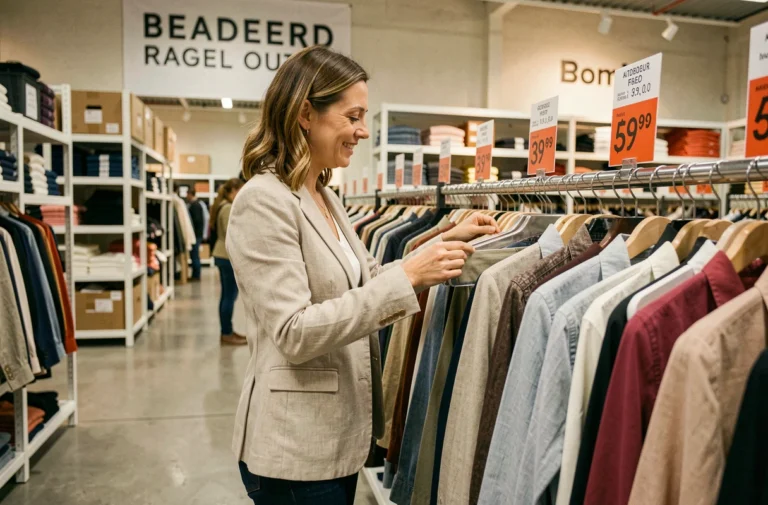
An oversized sweater spotted on the runways in October often ends up on the shelves by January, tagged with an “eco-friendly” label that no one checks for content. This year, fashion, beauty, and lifestyle trends are facing a new reality: the European Union is tightening its rules on what brands can say, sell, and discard. Let’s take stock of what is changing concretely in our shopping and style habits.
End of the destruction of unsold goods: what it changes in stores
Since July 19, 2026, large companies operating in the EU are no longer allowed to destroy their unsold clothing, accessories, and shoes, except for exemptions provided by the text. They must also publish certain information about the volumes destroyed.
In practice, we are already seeing the consequences in stores. Capsule collections are shortening, production quantities are decreasing, and end-of-line items are arriving in clearance faster. For those following the seasonal fashion trends, this means shorter buying windows for the most sought-after pieces.
The reflex to adopt: monitor drops rather than wait for sales. Brands are adjusting their production schedules, and trendy pieces like the flowy dress or the revamped trench this season may not be restocked. This is not a marketing argument; it is a direct logistical constraint linked to the new regulation.
To keep up with these fashion and lifestyle developments throughout the season, you can regularly check https://www.bhmagazine.fr/, which continuously covers these topics.

Sustainable claims and greenwashing: reading labels differently
The European directive Empowering Consumers for the Green Transition changes the game for brand communication. Vague formulations like “sustainable,” “eco-friendly,” or “planet-friendly” are now regulated. Self-certification logos and climate claims based solely on carbon offsetting also fall under this directive.
The control extends to brand names and visuals when they can be interpreted as an environmental promise. A brand called “Green Thread” that displays leaves on its packaging will have to justify these choices if a consumer perceives them as an ecological claim.
To navigate this new landscape, here are a few concrete guidelines:
- A label displayed on a garment must correspond to a verifiable third-party certification, not an internal brand program
- The terms “natural” or “organic” on a cosmetic do not guarantee anything without a specific reference (Cosmos, Ecocert, for example)
- Campaigns highlighting the “carbon neutrality” of a textile product often rely on offsetting, which the directive directly targets
This change affects not only fashion but also beauty and lifestyle in a broader sense. We no longer choose a product in the same way when the words on the packaging are subject to verification.
Digital product passport: QR code traceability arrives in textiles
The European regulation on eco-design provides for a digital passport for textiles, accessible via QR code. This passport will gradually contain data on composition, origin, traceability, durability, reparability, and end-of-life of the product.
The detailed requirements still need to be set by a specific European act expected by 2027. Therefore, we do not yet have a standardized product sheet for all clothing, but the regulatory framework is in place and brands are preparing for it.
In practice, we will soon be able to scan a dress or a pair of sneakers in-store to find out where the fabric comes from, how the garment was assembled, and what repair options exist. This is a change in the relationship to the product that goes far beyond style: we are moving from impulse buying to informed purchasing.
Responses on this point vary by brand. Some high-end brands are already testing simplified versions of the digital passport, while fast fashion is waiting for legal obligations. The gap between these two approaches will likely redefine what we consider a quality brand in the coming seasons.

Autumn-winter style trends: pieces that withstand these constraints
When we cross the fashion trends spotted on the runways with these new regulatory constraints, certain pieces stand out. Not because they are “in fashion” in the classic sense, but because they check both boxes: desirability and documentable durability.
The structured wool-blend coat
Oversized cuts remain present, but there is a return to more fitted shoulder coats, with materials whose composition will soon be traceable. Investing in a well-cut coat becomes a fashion and regulatory choice.
Leather accessories with identifiable provenance
Bags, belts, shoes: leather accessories with documented origins gain perceived value. This season’s accessory trends favor clean shapes that transcend seasons, aligning with the anti-waste logic of the new regulation.
Minimalist white sneakers
Still present on Instagram and the runways, white sneakers remain a staple. Their advantage in the current context: they can be repaired (soles, laces) and their simple design makes them less prone to stylistic obsolescence.
- Raw, unwashed denim, whose manufacturing process is easier to trace
- Ribbed knit dresses, worn from spring to autumn with different accessories
- Layering pieces (vests, lightweight jackets) that extend the usage duration of a wardrobe
The common thread of this season is not a color or a cut. It is the ability of a piece to prove what it is, where it comes from, and how long it can last. Brands that integrate this transparency into their style will get ahead, and our consumer choices will follow.