
Recovery after a workout involves several distinct physiological mechanisms: repair of muscle fibers, replenishment of glycogen stores, and rebalancing of hydration and hormones. Measuring the effectiveness of each method requires comparing their impact on these parameters rather than stacking them without hierarchy. This article analyzes recovery levers from the perspective of their actual effect on muscle regeneration and preparation for subsequent sessions.
Cold baths after training: perceived recovery versus muscle adaptation
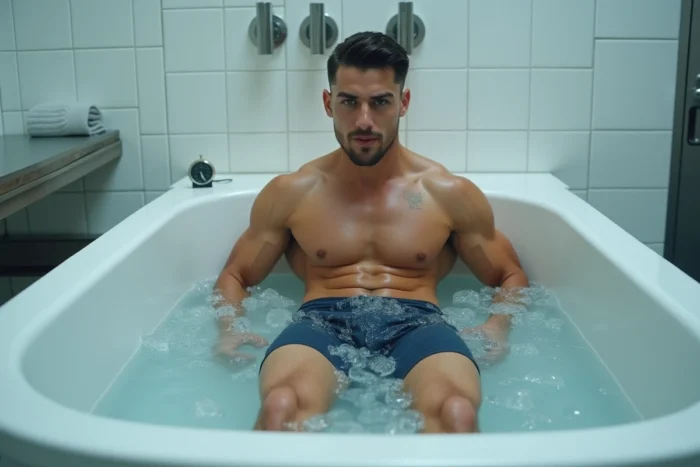
Immersion in cold water remains one of the most debated methods. Athletes who use it report a noticeable reduction in the sensation of soreness in the hours following exertion. This subjective benefit is real and documented.
However, cold baths can diminish strength and hypertrophy gains when practiced systematically after resistance training. The vasoconstriction caused by the cold limits the local inflammatory process, which is involved in the reconstruction of the stressed muscle fibers.
The table below summarizes this opposition between immediate comfort and long-term progression.
| Criterion | Post-effort cold bath | Passive recovery (simple rest) |
|---|---|---|
| Short-term perceived pain | Reduced | More pronounced |
| Muscle adaptation (strength, hypertrophy) | Potentially diminished with systematic use | Preserved |
| Relevance | Competition, tournament, back-to-back matches | Classic training cycle |
Cold immersion thus retains tactical interest during a tournament or a series of closely scheduled sessions, when the priority is to recover quickly. For a weight training cycle aimed at progression, it is better to forgo it. You can learn everything about recovery after sports by cross-referencing this data with other complementary approaches.
Protein distribution throughout the day: the true nutritional lever for regeneration
Most articles on sports recovery emphasize the post-workout meal. Protein intake right after exertion matters, but distributing protein over several servings spaced 3 to 4 hours apart produces a superior effect on muscle protein synthesis.
Concentrating all protein intake into a single post-session meal saturates the body’s absorption capacity at a given moment, while leaving the rest of the day without a stimulus for reconstruction. Muscle regeneration does not stop an hour after exertion: it continues for several tens of hours.
The four components of complete nutritional recovery
The most rigorous approaches distinguish four nutritional levers to adjust according to the intensity of the effort:
- Carbohydrates: they replenish muscle glycogen stores, the main fuel for intense efforts. Their quantity directly depends on the duration and intensity of the session.
- Proteins: they provide the amino acids necessary for repairing micro-tears in muscle tissue. Spreading them throughout the day takes precedence over a single dose.
- Liquids: sweating leads to a loss of hydration that slows all recovery processes if not compensated quickly.
- Sodium: often overlooked, it is evacuated in significant amounts through sweat and contributes to maintaining electrolyte balance.
Adapting each of these four areas to the effort performed yields more reliable results than following a single nutritional protocol applied to all sessions.
Sleep and sports recovery: the parameter that surpasses all tools
Among all the recovery levers studied, sleep is the one with the most documented impact on tissue repair. During deep sleep phases, the body releases growth hormone, which is directly involved in the regeneration of muscle and tendon tissues.
Nocturnal hormonal regulation is not limited to physical reconstruction. Sleep also affects cortisol, the stress hormone, whose high levels hinder recovery and promote muscle catabolism. A shortened or fragmented night disrupts this hormonal cycle far more than a massage or a session of electrostimulation can compensate.
Sleep quality versus raw duration
Sleeping long is not enough if the sleep is fragmented. Several factors degrade the quality of rest without reducing the time spent in bed: screen exposure before bedtime, excessively high ambient temperature, caffeine consumption late in the day.
An athlete who sleeps seven hours of continuous sleep recovers better than another who accumulates nine hours interrupted by awakenings. The continuity of deep sleep conditions the hormonal release necessary for regeneration.

Active recovery after exertion: intensity and duration to calibrate
Active recovery (walking, light cycling, gentle swimming) promotes blood circulation and accelerates the elimination of metabolic waste accumulated during exercise. Unlike total rest, it maintains sufficient blood flow to the stressed muscles without imposing additional mechanical strain.
A common mistake is to turn this phase into an additional workout. The intensity should remain very low, around a minimal perceived effort, for a short duration. Exceeding this threshold adds muscular stress instead of facilitating regeneration.
- Moderate-paced walking for about fifteen minutes after an intense weight training session.
- Low-resistance cycling after a running session, to engage the lower limbs without joint impact.
- Slow swimming the day after high-intensity exertion, combining joint decompression and circulatory activation.
This type of active recovery complements passive rest without replacing it. The two approaches work alternately according to the training schedule and the level of accumulated fatigue.
The most determining factor remains the coherence between these different levers. A recovery protocol that combines regular protein distribution, continuous deep sleep, and a reasoned management of cold or active recovery produces cumulative results. No isolated tool compensates for degraded sleep or poorly calibrated nutrition: it is the combination that drives progress from one session to the next.