We’ve all experienced that moment: the desire to host a dozen friends on a Saturday night, followed by the cold shower of adding up catering, drinks, and decorations. The classic reflex is to cut down the guest list. The best approach is to review the method post by post, keeping everyone on the list.
Home Party: Set Three Priority Areas Before the Overall Budget
Most guides recommend setting a total budget and then distributing it. In practice, this method often leads to spreading resources thin without satisfying anyone. A more effective approach is to identify three priority areas and concentrate resources there.
Specifically, we rank expenses by their impact on the atmosphere: food, music, and lighting almost always come first. Decorations, premium drinks, and themed accessories take a back seat. By accepting to keep things simple in the secondary areas, we free up resources to enhance what really matters.
Before starting purchases, we can also organize a home party by listing everything we already have: leftover decorations from a previous party, a Bluetooth speaker, a decent tablecloth, mismatched but sufficient glasses. This sorting avoids duplicate purchases, a commonly underestimated area of waste.

Waste-Reducing Menu: Cooking with Eggs and Seasonal Products
Prices for meals eaten out continue to rise, which enhances the appeal of homemade food. However, not all ingredients rise at the same pace. Fresh fruits and vegetables are among the categories whose prices are climbing faster than average, while egg prices are expected to drop significantly.
We can take advantage of this disparity. An egg-centered menu costs much less than a traditional buffet: assorted quiches, tortillas, deviled eggs, savory crepes. These recipes can be prepared the day before, served cold or warm, and are generally liked by almost everyone.
For fruits and vegetables, we prioritize what is in season at the time of the party. A tomato salad in summer or a squash soup in autumn will cost a fraction of the price of an off-season crudité platter. The most cost-effective trick remains the cold buffet format, which eliminates the stress of hot service and reduces waste.
Drinks: The Ratio That Avoids Surplus
Feedback varies on this point, but a reliable base for an aperitif followed by an evening: plan for about three glasses per person for the first two hours, then one to two glasses per additional hour. Offering a large quantity of a single signature drink rather than five different options simplifies shopping and reduces the budget.
A homemade punch, a pitcher of spritz, or a flavored lemonade will do the trick. We complement with water and ask guests who want a specific drink to bring it, which is not awkward when announced in advance.
Evening Atmosphere and Decor: Focus on Lighting Rather Than Accessories
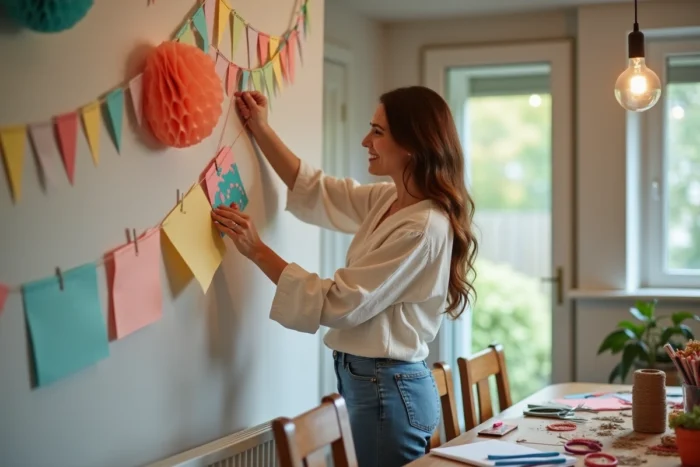
The most expensive decorations are consumables: balloons, confetti, disposable tablecloths, centerpieces bought for a single use. We can eliminate almost all of this expense by focusing on one lever: light.
Lowering the main lighting and adding occasional sources transforms any living room. Tea lights (the cheapest in the aisle), a string of lights saved from the holiday season, or even bedside lamps placed on the floor create an atmosphere that twenty balloons cannot match.
Party Theme Without a Decor Budget
Instead of a visual theme (which involves purchases), we choose an activity or dress code theme. A few examples that cost nothing:
- “Everyone brings their signature dish” night: each guest cooks a dish, the buffet fills up at no cost to the host, and diversity is guaranteed.
- Single color dress code: everyone comes in white, black, or red. The visual effect is spectacular in photos, without spending a dime on decoration.
- Board game or karaoke night: a free app on a phone connected to the speaker is enough for karaoke, and most households have at least two or three board games.
Activities and Games for Guests: What Really Works Without Equipment
We often read lists of twenty possible activities. In practice, a successful evening revolves around two activities at most, well-timed. Too many activities disrupt the flow of conversations.
The best time to launch a game is after the meal, when energy dips slightly. A homemade quiz about the guests present (anecdotes collected discreetly before the evening) works every time and only requires a phone to read the questions.
For parties with kids, a drawing corner or a treasure hunt in the apartment keeps them occupied without needing to buy anything. We prepare clues on pieces of paper, hide a few small household items, and that’s it.
Budget-Friendly Party: Last-Minute Mistakes That Cost a Lot
The real trap of a budget party is not the lack of ideas, but the panic of the last day. We realize we’re short on napkins, rush to the supermarket on Saturday at 5 PM, and leave with three bags of unexpected purchases.
Wrapping up purchases at least 48 hours before the party eliminates this reflex. This timeframe also allows for calm cooking, testing the playlist, and rearranging the living room without stress.
The other common mistake: wanting to do everything oneself for the sake of saving, then splurging on a last-minute premium purchase out of fatigue. Delegating a task (asking a friend to handle the music, another to bring dessert) is not a sign of weakness; it’s a budget and mental health strategy.
A successful home party is not measured by the number of dishes or the quality of the decoration. It depends on the energy we have left when guests arrive. Keeping things simple also preserves the joy of hosting.