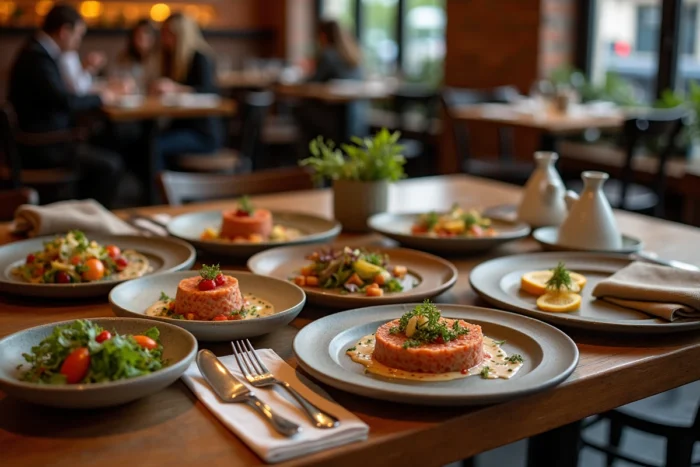
Each season brings its share of gourmet novelties that redefine restaurant menus, fine grocery store aisles, and everyday shared recipes. Identifying these culinary trends allows one to spot flavors worth exploring, whether for a festive table, an impromptu dinner, or simply to refresh cooking habits.
Fermentation and live ingredients in everyday cooking
Fermentation has moved beyond being a trend to become a staple in common culinary practices. Miso produced in France, artisanal kimchi sold in neighborhood grocery stores, fruit kefir offered as an alternative to sodas: these living products are now found on tables far beyond specialized restaurants.
What has changed is their integration into accessible recipes. Miso butter on roasted vegetables, a kombucha vinaigrette, lacto-fermented caramel: chefs share these techniques on their networks, and the general public adapts them without any special equipment. Fermentation simplifies the search for complex flavors without multiplying ingredients.
In the realm of gastronomy, several restaurants in Paris and the surrounding areas are working with long ferments (sometimes lasting several months) to create unique condiments. This know-how, once reserved for Asian cuisines, is becoming a hallmark of contemporary French cooking. To keep up with all the news on Gourmandises et Bavardages, this is the type of topic that comes up regularly as the trend accelerates.

Vegetable recipes for the holidays: Christmas and Easter change their tune
Christmas and Easter menus increasingly feature dishes where vegetables take center stage, without excluding animal products from the rest of the table. The principle is no longer to replace but to offer a vegetable dish sufficiently developed to be at the heart of the meal.
A whole roasted and glazed cauliflower can take the place of a meat dish if the cooking technique and seasoning are mastered. Chefs who adopt this approach focus on texture and flavor concentration rather than imitation.
Here are some concrete ideas for gourmet holidays:
- A celeriac in a salt crust, sliced at the table like a roast, served with a porcini sauce
- Butternut squash ravioli with a vegetable dashi broth and grilled mushrooms
- A dessert made from fermented chestnut cream, paired with pear and rosemary sorbet
These ideas do not require giving up foie gras or the classic Yule log. They add a dish to the menu that surprises guests and refreshes the meal’s dynamic.
Restaurant trends: what chefs are highlighting this season
Several movements are emerging in restaurants, from fine dining to neighborhood bistros.
The return of long sauces
Cooking juices reduced for hours, sauces made with brown butter, emulsions based on grilled vegetables: sauce is once again the central element of the plate. After years of minimalist cooking where garnishes were kept to a minimum, menus are once again displaying titles that put sauce first (“turbot, yellow wine sauce” rather than “turbot, seasonal vegetables”).
This trend requires time for preparation, which explains why it is mainly developing in restaurants that embrace a foundational approach to cooking.
Less known seafood on Parisian menus
In Paris and other major cities, restaurant menus are increasingly featuring lesser-known fish and shellfish. Yellow pollock, chub mackerel, razor clams, grey clams: these products, often cheaper than sea bass or sole, allow chefs to work with different flavors while offering more accessible prices.
Grilled chub mackerel, long considered a second-rate fish, is now appearing on well-rated tables. Its fatty flesh withstands high-heat cooking and pairs well with acidic condiments (citrus, pickles).
Fine grocery and flavors to explore at home
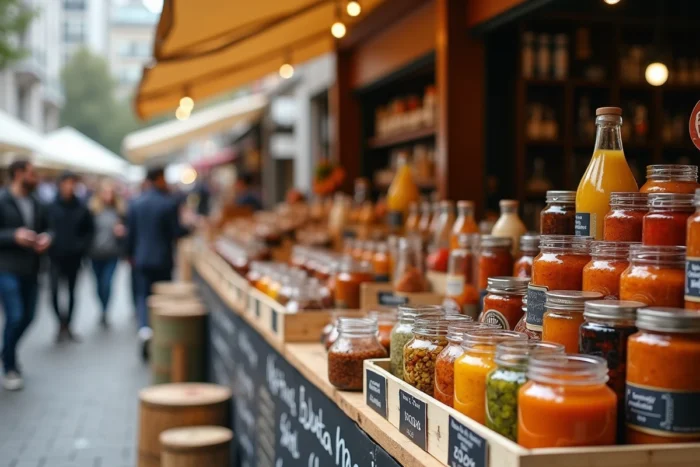
Food trends are not limited to restaurants. The fine grocery aisle is experiencing rapid renewal, driven by producers who regularly launch new references.
Among the standout categories:
- Cold-infused oils (yuzu olive oil, smoked hazelnut oil) that transform a simple dish with just a few drops
- Condiments made from fermented chili, inspired by Korean gochujang but made with peppers grown in France
- Single-origin chocolates, where the bean comes from a specific plot, with pronounced fruity or woody notes
- Artisanal pasta made from ancient grains (spelt, einkorn), which offer a denser texture and a pronounced grain flavor
These products change everyday cooking without requiring technical skills. They allow for elevating a simple recipe (pasta, salad, toast) through the quality of a single well-chosen ingredient.
Sustainable gastronomy: a criterion for choice, not a marketing argument
Sustainability increasingly influences consumer choices in concrete ways. What was once just talk is now being realized: short supply chains highlighted with the producer’s name, menus adjusted weekly according to arrivals, gradual removal of out-of-season products in committed restaurants.
Chefs who adopt this logic no longer present it as a constraint. Working with a local farmer requires adapting the menu, but this constraint fosters creativity. A vegetable delivered in the morning, cooked by noon, has a freshness that doesn’t need complex transformation.
For amateur cooks, the same principle applies: buy fewer items but choose them better, and build recipes around what is available rather than searching for a specific ingredient year-round.
The gourmet novelties of the season share a common thread: the pursuit of bold flavors achieved through simple techniques and well-sourced products. Whether at a restaurant table, in front of a grocery aisle, or in one’s own kitchen, the best reflex remains to taste before following a trend.