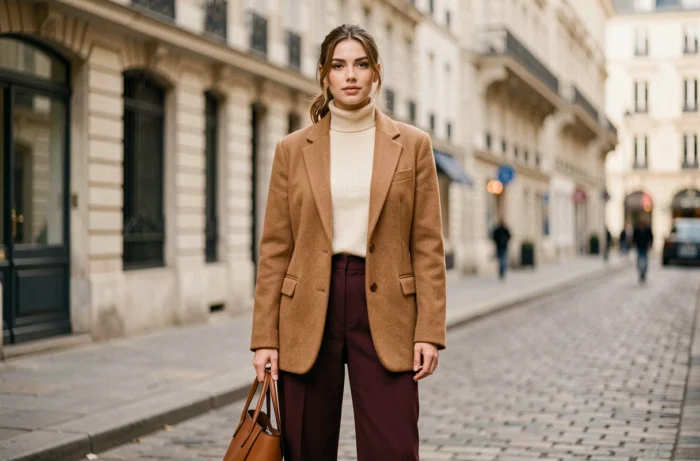
The autumn-winter 2026-2027 fashion shows have established choices in garment construction that deserve a technical reading before being translated into purchases. Several fashion trends this season are based on precise logic of patterning, finishing, and color palette, far from the simple seasonal recycling of basic pieces.
Anti-greenwashing regulation and material choices this season
The European directive Empowering Consumers for the Green Transition comes into effect on September 27, 2026. From this date, the terms “eco-friendly” or “carbon neutral” without verifiable proof become illegal in the European Union. Brands that do not provide recognized certification or detailed public data risk fines of up to 4% of their annual turnover in the relevant member state.
This tightening has a direct impact on the choice of materials offered this season. Brands working with linen, traceable merino wool, or certified cotton are now communicating with public technical sheets, where marketing vagueness was previously sufficient.
For those wanting to adopt a sustainable style without falling for misleading labeling, checking for the presence of third-party certification (GOTS, OEKO-TEX, RWS) on the label becomes a reflex to integrate even before looking at the cut.
This regulatory context also pushes collections to reduce the number of references. Fewer pieces, but materials whose traceability is documented. It’s a structural change that alters the way we can discover fashion on Bertrand Barré and elsewhere, filtering first by textile composition rather than visual trend.
Gender-neutral wardrobe: oversized cuts and shoulder construction
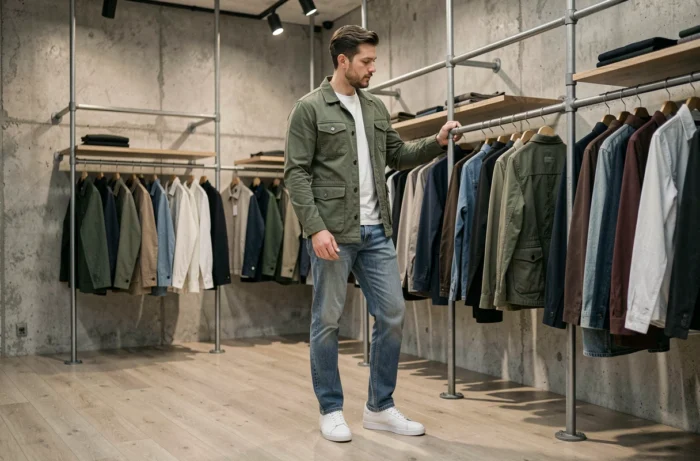
The borrowed menswear in women’s collections is not just about putting on an oversized blazer. The autumn-winter 2026-2027 shows demonstrate a focus on shoulder line work that distinguishes this season from previous ones. The structured shoulder rises by two to three centimeters compared to last year’s collections, with discreet padding that reshapes the silhouette without the 1980s suit effect.
The military pant, cited by several runways, functions here as a high-waisted, straight-leg piece, not as a utilitarian cargo. The difference lies in the fabric: a heavy cotton twill, sometimes blended with wool, that holds the line without clinging. It is this controlled rigidity of the fabric that gives the oversized silhouette its poise, not merely the volume of the pattern.
Proportions to master for a successful oversized look
The trap of oversized remains poorly distributed volume. We recommend never layering two loose pieces on the same vertical axis. A wide structured top calls for a fitted bottom (straight jeans, cigarette pants). Conversely, wide pleated trousers work with a fitted top or tucked into the waistband.
- Oversized blazer with marked shoulders + high-waisted bootcut jeans: the most reliable combination to elongate the silhouette without losing structure
- Long straight coat + slim wool pants: the volume relationship creates a column effect that works on all body types
- Men’s thick poplin shirt worn open over a fine turtleneck: the layering game that avoids the pajama effect
Autumn-winter 2026 color palette: burgundy, lime green, and sky blue
Burgundy emerges as the guiding color of the season, present on coats, midi dresses, and leather accessories. This is not a wine-like burgundy leaning towards brown, but a cool shade, close to wine-red, that contrasts with the usual warm tones of autumn.
Lime green, on the other hand, works as an accent. It is used sparingly on a single piece (a bag, a scarf, a sweater) to break up a neutral base. When used in a total look, it quickly veers into stage costume territory. Sky blue brings an unexpected softness in winter, especially on heavy materials like wool cloth or boiled cashmere.
Pairing these colors without a fashion faux pas
Burgundy and lime green should not be worn together unless aiming for a very theatrical contrast. Burgundy + sky blue creates a cold-cold balance that works naturally. Lime green pairs better with beige, off-white, or medium gray.
These combinations rest on a principle of color temperature. Mixing two cool tones (burgundy and blue) produces a silent harmony. Mixing a bright warm tone (lime green) with a saturated cool tone (burgundy) generates a visual shock that requires stylistic expertise.
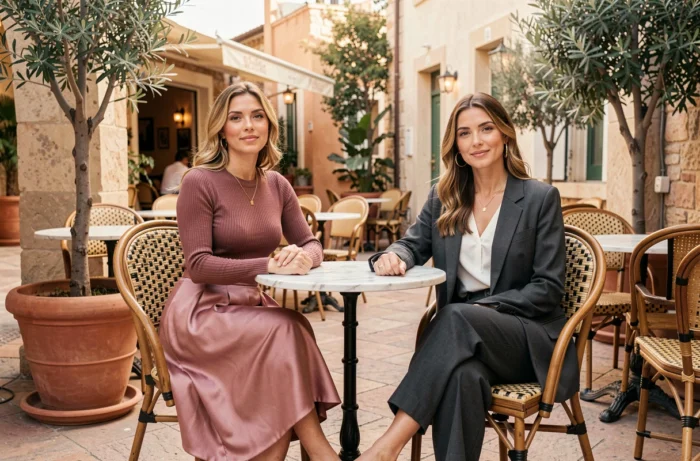
Key structured pieces to favor for a sustainable seasonal style
Rather than listing twenty pieces to buy, we isolate those that truly transcend several seasons while capturing current codes.
- The funnel neck jacket: a technical piece that replaces the classic jacket and provides upper body volume in line with the raised shoulder trend
- The long ribbed knit or heavy crepe skirt: an alternative to the midi dress, allowing for more combinations with the structured tops of the season
- The high-waisted boot-cut jeans in raw denim: the most versatile cut to balance an oversized top, and a basic that doesn’t go out of style from season to season
- The medium-brim felt hat: an accessory that completes an autumn silhouette without falling into costume, provided a sober shape and neutral color are chosen
Each of these pieces adheres to a construction logic: they stand alone in an outfit and do not rely on a fleeting fashion effect to justify their presence in a wardrobe.
The increase in greenhouse gas emissions from the clothing industry, documented by the Apparel Impact Institute, reminds us that producing less but better is not just a slogan. Choosing four well-constructed pieces rather than twelve disposable items after a season remains the most coherent fashion gesture with current regulatory and environmental constraints.