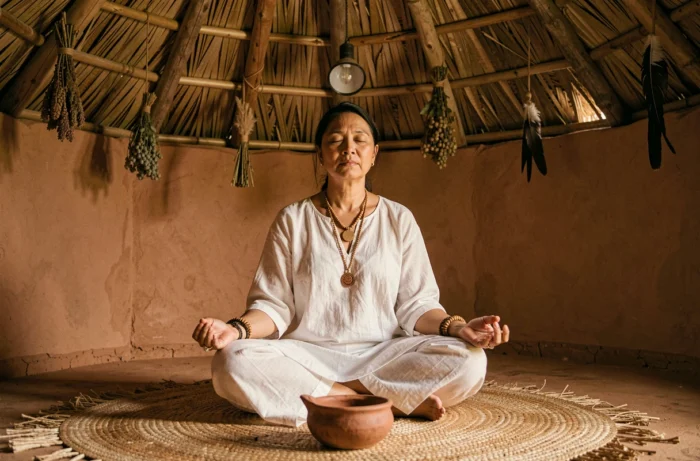
Ayahuasca attracts an increasing number of Westerners each year to retreat centers in Latin America and, more recently, in Europe. This brew made from the Banisteriopsis caapi vine and Psychotria viridis leaves has been used for centuries by indigenous peoples of the Amazon. The interest it generates goes beyond the spiritual realm to touch on clinical research in psychiatry, raising as many hopes as questions about safety, legal frameworks, and the reality of reported transformations.
Health Risks in Ayahuasca Retreats: What Recent Incidents Reveal
Since 2024, several journalistic investigations have documented deaths occurring in psychedelic retreats in Latin America. A case of fatal multi-organ failure after ayahuasca ingestion in Peru was reported in June 2026. Other deaths related to ibogaine in Costa Rica or retreats in Mexico add to this toll.
The investigations point to recurring failures: lack of prior medical screening, no emergency protocol on-site, untrained staff in resuscitation care. The structural problem lies in the absence of an official incident registry in this sector. No authority centralizes the data, making any reliable assessment of the rate of serious complications impossible.
This regulatory void places participants in a situation comparable to medical tourism without a safety net. The decision to experience an immersive ayahuasca retreat thus requires prior evaluation of the center, its protocols, and the qualifications of its team, far beyond simply reading online testimonials.
Ayahuasca and Clinical Research: A Gap Between DMT Studies and Fieldwork
The scientific community is actively interested in the molecules present in ayahuasca, particularly DMT (dimethyltryptamine). Several clinical trials focus on synthetic analogs of DMT or psilocybin, another psychedelic substance.
Trials concerning post-traumatic stress also involve psychedelics in a controlled hospital setting. These studies progress in a regulated environment, with strict inclusion criteria and ongoing medical monitoring.
In contrast, ayahuasca itself is not subject to any clear regulatory pathway toward therapeutic approval, neither in Europe nor in North America. Trials focus on isolated molecules, not on the traditional brew whose composition varies from one preparation to another. This gap means that the therapeutic promises associated with ayahuasca in retreat centers do not rest on the same foundations as the results obtained in the laboratory.
What Studies Really Measure
The preclinical results obtained on isolated molecules are promising, but the distance between a laboratory model and a validated human application remains considerable. Field feedback diverges on this point: some participants describe lasting changes in their relationship with anxiety or addictions, while others report no persistent effects after a few weeks.
Legal Framework of Ayahuasca in France and Europe
In France, DMT is listed as a narcotic. The consumption, possession, and distribution of ayahuasca are therefore prohibited on French territory. This criminal classification explains why retreats take place abroad, mainly in Peru, Colombia, Ecuador, but also in the Netherlands or Portugal, where the framework varies.
In Portugal, the decriminalization of personal drug use does not mean legalization. In the Netherlands, the legal situation of psychedelic retreats involves gray areas exploited by some operators. No European country has established a specific regulatory framework governing ayahuasca ceremonies with medical standards.
- DMT is classified as a narcotic in France, making any ceremony illegal on the territory.
- The Portuguese decriminalization concerns personal consumption, not the organization of commercial retreats.
- In the Netherlands, the regulation of psychedelic retreats remains unclear, with no mandatory medical approval.
- No European registry lists the centers or their incidents.
Transformation Process: Between Subjective Experience and Long-Term Integration
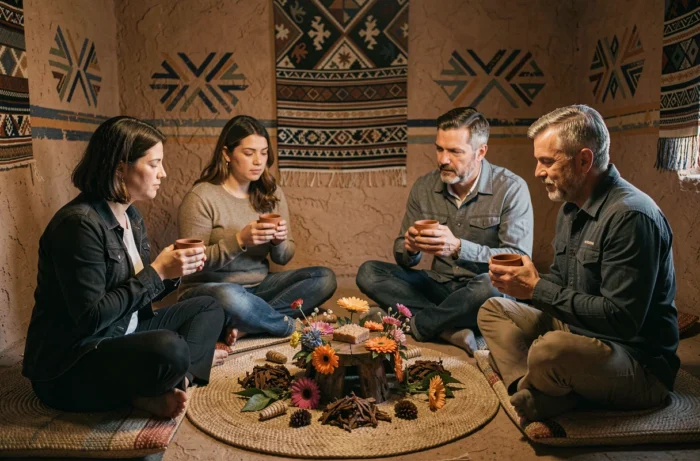
Participants’ testimonials frequently describe intense visions, a confrontation with buried memories, and a feeling of reconnection to oneself. These accounts, as powerful as they are, raise a rarely addressed question: does the reported transformation last over time without structured post-retreat support?
Several centers now offer integration programs, including interviews with psychologists in the weeks following the ceremony. This step seems crucial. Without it, the visionary experience risks remaining an isolated, intense episode that is not integrated into daily life.
Factors Influencing the Experience
The nature of the experience depends on multiple variables:
- The participant’s prior psychological state, particularly the presence of undiagnosed dissociative or psychotic disorders.
- The exact composition of the brew, which varies according to the preparers and plants used.
- The ceremonial setting: presence of an experienced facilitator, group size, safety protocol.
The available data do not allow for conclusions about a typical profile of a person who would benefit more from the experience. The absence of standardized selection criteria in the majority of centers remains a blind spot in the sector.
The phenomenon of ayahuasca retreats sits at the crossroads of an ancient shamanic tradition and a rapidly expanding wellness market. Potential participants benefit from distinguishing marketing promises from documented facts, verifying the safety protocols of the chosen center, and planning for psychological follow-up after the experience. Clinical research is advancing, but it focuses on isolated molecules in controlled conditions, not on ceremonies in the jungle.