
A vehicle parked in the same spot for weeks, flat tires, a layer of dust on the windshield, dead leaves stuck under the wipers. We all know this scenario in our street or parking lot. Reporting an abandoned vehicle follows a precise procedure, and the way it is formulated directly affects the speed of the municipal response.
Prepare a report of an abandoned vehicle that will be prioritized
The usual reflex is to call the town hall or the municipal police to report the problem. It works, but an oral report without specific details often ends up at the bottom of the pile. What makes the difference is the quality of the information provided from the first contact.
Before picking up the phone or filling out a form, gather the following elements:
- The exact address of the parking spot, with a visual reference (building number, intersection, nearby charging station)
- The license plate if it is still readable, the make, model, and color of the vehicle
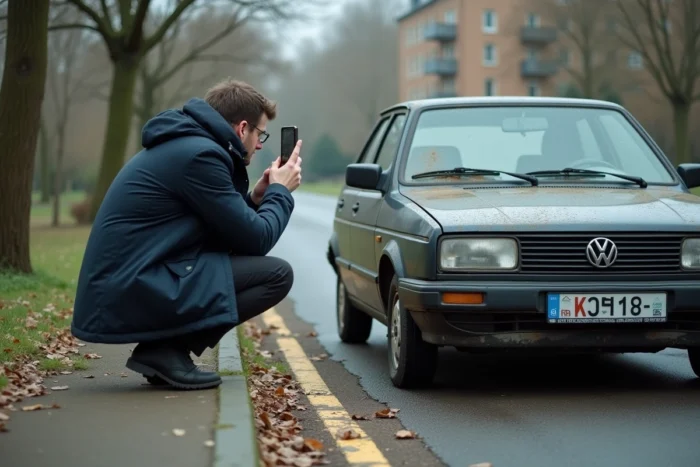
- Timestamped photos showing the condition of the vehicle (flat tires, broken window, visible rust, expired technical inspection on the windshield)
- An estimate of the duration of immobilization, even approximate, supported if possible by a neighbor’s testimony
These elements allow the municipal police to quickly assess the situation. You can report an abandoned vehicle effectively by combining a phone call with an email containing photos and details. This dual approach leaves a written record and speeds up processing.
Municipal reporting applications: an underutilized lever
Many residents are unaware that their municipality probably offers a digital tool for this type of report. In Paris, the Dans Ma Rue application includes a specific category for abandoned or abandoned vehicles. Other metropolitan areas have developed similar tools, such as the Métropole Dans Ma Poche application in Marseille, also accessible via the number 3013.
Reports via the application are geolocated and timestamped automatically. The file goes directly into the processing circuit, with a photo to support it. Compared to a simple call, the follow-up is traceable: you receive notifications on the progress.
The main advantage of these tools is that they create a history. If several residents report the same vehicle over the same period, the file automatically rises in priority. Therefore, it is in everyone’s interest to encourage their neighbors to make their own reports rather than settling for a single collective call.
Legal timeframe and towing: what happens after the report
On public roads, a vehicle is legally considered abandoned after seven consecutive days of immobilization in the same location. The word “consecutive” matters: a vehicle moved a few meters and then returned to the same spot resets the legal clock.
Once the report is received, the municipal police send an officer to verify the immobilization. If the owner can be identified through the license plate, they receive a formal notice to move or remove their vehicle. Without a response from them, the towing procedure can be initiated.
Responses vary on this point depending on the municipalities: some act within a few weeks, while others take several months. The number of available tow trucks compared to the volume of reports often explains these discrepancies. Regularly following up with the concerned service (every two to three weeks) remains the most reliable way to maintain pressure.
When the vehicle looks like a wreck
A vehicle without plates, with broken windows, or clearly out of service falls into a different category: that of a wrecked vehicle. The procedure is then expedited because the risk of pollution (oils, batteries, fluids) justifies a quicker intervention. The report follows the same channel, but emphasis is placed on the advanced state of degradation in the description.
Abandoned vehicle in a private parking lot or condominium: a distinct procedure
Confusion is common: people think that the town hall also manages private parking lots. This is not the case. On private land or a condominium parking lot, the timeframe before action can generally be taken is thirty days.
The procedure relies on the landowner or the condominium manager. If the vehicle owner is identified, a formal notice by registered letter with acknowledgment of receipt must be sent, allowing eight days to remove the vehicle. Articles R.325-47 to R.325-49 of the Highway Code govern this procedure.
If the vehicle owner does not respond after this period, the manager or landowner can contact a judicial police officer to initiate removal. The procedure is slower than on public roads, and this is often where situations become stuck.

Documenting to protect the file
In a condominium, each step must be documented: regular photos with dates, copies of registered letters, minutes from the management. In case of a later dispute with the vehicle owner, this written record constitutes the only admissible proof.
Reporting an abandoned vehicle is not limited to a phone call. A structured file, timestamped photos, and the use of municipal digital tools transform a vague complaint into a prioritized request. In a private parking lot, documentary rigor is even more crucial, as the procedure relies entirely on the initiative of the landowner.