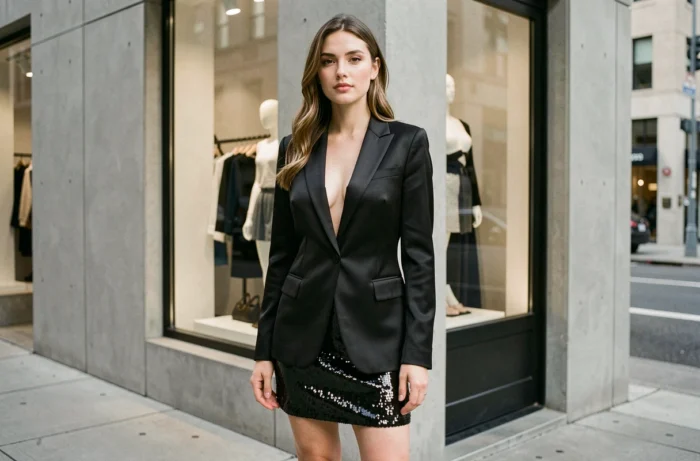
The term clubwear refers to a category of clothing designed for nightlife outings, club parties, and festive events. For several seasons, this category has undergone a profound transformation: the pieces are no longer limited to strictly nighttime use; they are integrated into versatile wardrobes. The fashion trends of 2024 confirm this shift, with cuts, materials, and finishes that blur the line between evening wear and everyday attire.
Versatile clubwear: one piece, multiple contexts
The logic of nighttime clothing reserved for a single use is fading. Online searches for clubwear have notably increased between 2023 and 2024, with a rise of about 37% in certain markets for queries combining clubwear and structured pieces like blazers. This signal reflects a fundamental change: buyers want evening wear that is less costume-like and more adaptable to daily life.
In practical terms, a top with geometric cutouts worn in a club on Saturday night is now paired with tailored trousers on Monday. A fitted blazer made from stretch fabric, designed to withstand the heat of a dance floor, also works in a semi-professional context. This versatility relies on three specific technical criteria:
- Wrinkle resistance, allowing for several hours of movement without the garment losing its shape.
- Thermal management, through breathable mesh fabrics or synthetic blends suitable for the overheated environments of clubs.
- Cuts designed for mobility, featuring wider armholes, racerback designs, or side slits that do not restrict movement.
To explore the Fashion Clubwear selection in this day-to-night logic, the most reliable filter remains the material: a fabric that combines stretch and structured hold covers the majority of uses.
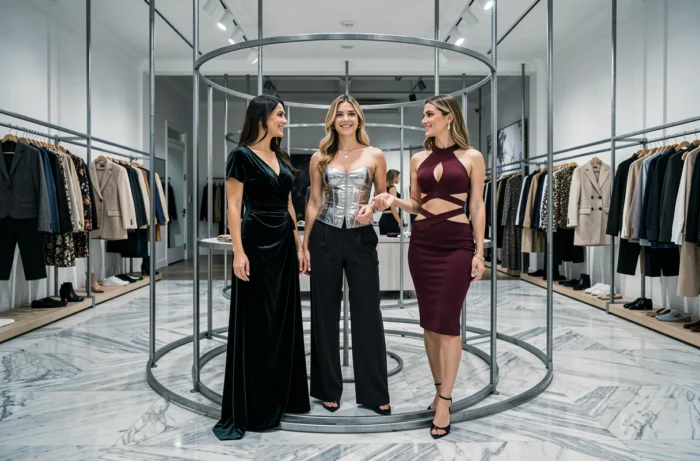
Clubwear materials and finishes to prioritize in 2024
The choice of fabric determines the longevity and versatility of a clubwear piece. The fashion trends of 2024 steer the category towards technical materials with a luxurious appearance, moving away from the all-polyester shine of previous years.
Mesh remains a classic, but its 2024 version is thicker. Denser knits provide a drape similar to jersey while maintaining the partial transparency characteristic of the genre. Stretch satin is also gaining ground: it offers the shine associated with nightlife without the rigidity of traditional satin.
Finishes that distinguish a durable piece from a disposable purchase
Heat-sealed seams are gradually replacing visible topstitching on mid-range pieces. This process eliminates friction on the skin while dancing, a seemingly trivial detail that significantly affects comfort over several hours.
Subtle metallic details replace bulky rhinestones. Grommets, visible clasps, asymmetrical zippers: the trend is towards functional ornamentation, integrated into the garment’s construction rather than glued on the surface. These finishes withstand repeated washing better and blend into a daytime look without appearing costume-like.
Clubwear silhouettes 2024: what changes compared to previous seasons
The fall-winter 2024-2025 fashion shows highlighted elongated and fluid silhouettes, even among brands that influence evening wear. Clubwear absorbs this trend with a delay specific to its market.
The ultra-short mini skirt, long a staple of clubwear, is giving way to the split midi skirt. The high slit retains the sensual aspect of the genre while elongating the silhouette. The high-waisted flared pant, nearly absent from clubwear three years ago, is now prominent in dancefloor-oriented collections.

The role of the reimagined corset
The bustier corset, omnipresent since 2022, is evolving towards a less rigid form. The 2024 versions incorporate flexible boning and side mesh panels. The result: visible support without the chest compression of traditional models. This type of piece is now worn over an oversized shirt, illustrating the layering logic that permeates all of 2024’s fashion.
Responsible clubwear: beyond just appearance
The market for dance and evening wear, which has been steadily growing in recent years, faces specific environmental pressures. Clubwear pieces have historically had a high turnover rate: worn only a few times, often made from low-quality synthetic materials, they quickly end up as textile waste.
Several recent initiatives are attempting to change this pattern. The upcycling of textiles from festive events (such as festival tent tarps) now feeds into micro-capsule collections. Sustainable clubwear focuses on reducing the number of pieces rather than replacing material for material.
- Buying three modular pieces (one top, one bottom, one layering piece) instead of five complete outfits reduces the footprint without sacrificing variety in looks.
- Brands that communicate the exact composition of their fabrics (percentage of recycled fibers, origin of the thread) provide a more reliable transparency indicator than a generic label.
- The resale of clubwear pieces among individuals is experiencing its own dynamic, driven by platforms specializing in second-hand evening wear.
Choosing sustainable clubwear is less about the “eco-friendly” label and more about the construction of the garment. A well-cut piece, made from a fabric resistant to washing, worn in multiple contexts, remains the most concrete lever to limit textile waste associated with nightlife outings.